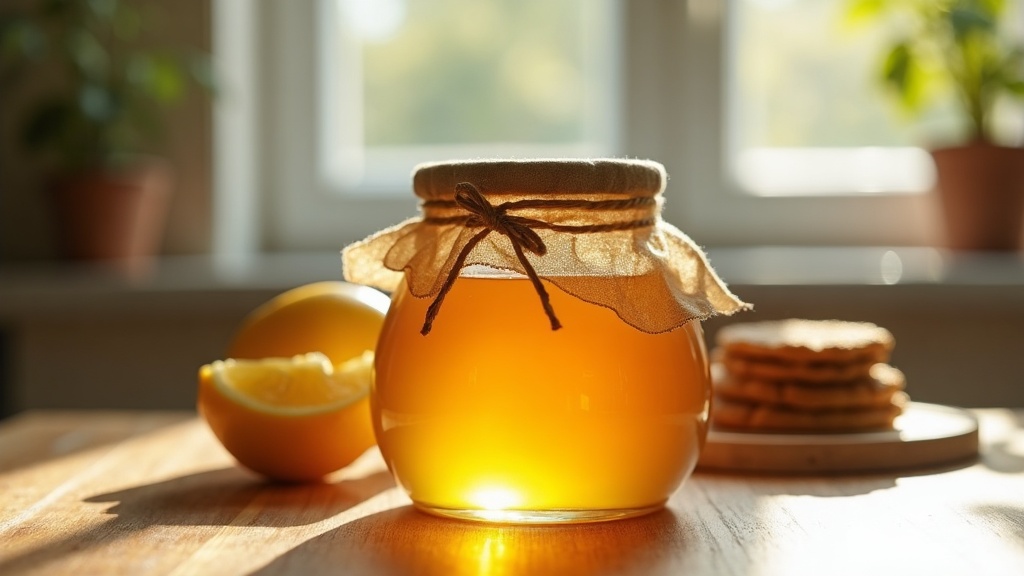
Long before supplement aisles and shortcuts existed, coastal households folded honey into a quiet evening ritual meant to slow the mind down at the end of the day, not speed it up. That tradition is resurfacing now, and it looks nothing like what most people expect.
The expectation is a gentle, uniform fade. The reality most people describe is messier — sharp on some days, foggy on others, tangled up with sleep, stress, and a dozen small daily habits nobody ever tracked closely enough to notice changing.
Focus that once held for an hour starts slipping after twenty minutes, and the shift is so gradual that most people only notice it in hindsight, comparing this year to five years ago.
Deep sleep stages shorten with age, and since consolidation of daily experience leans heavily on those stages, lighter sleep often shows up first as a foggier next morning.
Cellular energy production slows gradually across the decades, and the brain, which consumes a disproportionate share of the body's energy budget, tends to feel that shift early.
Retirement, fewer fixed obligations, and looser schedules remove the external cues that used to anchor attention throughout the day, leaving the mind without its usual scaffolding.
Some of what circulates about aging and memory is outdated, some is oversimplified, and some was never accurate to begin with. Here is a plainer look at three common claims.
Memory decline is inevitable and looks identical for everyone.
Cognitive aging follows widely different paths shaped by sleep quality, daily structure, stress load, and environment, which is why two people the same age can describe very different experiences.
If you didn’t do puzzles or brain games your whole life, it’s too late to matter now.
Daily rituals, attention habits, and lifestyle patterns at any age remain an active part of ongoing research and everyday conversation, not a window that simply closes.
Traditional foods like honey are just folklore with no place in a modern routine.
Mediterranean dietary patterns, including honey-based evening rituals, continue to be studied observationally, and interest in them has grown rather than faded.
Nothing here is complicated. The tradition this page explores is built around consistency, not intensity, and the three parts below describe how it tends to be structured.
Before changing anything, the ritual begins with simply paying attention to when foggy stretches happen during the day, without judgment or urgency attached to the observation.
A small, repeated evening habit — the same time, the same quiet setting — is used as a marker for winding the day down, honey included as part of that fixed routine.
Rather than measuring dramatic change, the tradition treats slow observation over weeks as the point, keeping expectations modest and the process sustainable.
In small coastal villages across the Mediterranean, evenings historically closed with a small, repeated gesture: a spoonful of local honey, often alongside olive oil and a quiet moment away from the day’s noise. It wasn’t framed as medicine. It was simply part of how the evening ended, generation after generation, long before anyone called it a wellness practice. Researchers studying regional dietary patterns have taken a renewed interest in these small, repeated rituals, not because any single ingredient was treated as remarkable, but because the consistency of the habit itself stood out.
The insight worth sitting with is not about honey as an ingredient — it’s about ritual as structure. A small, repeated evening habit gave the day a clear endpoint, and that endpoint is the part modern routines often lack.
Starting a thought clearly and then losing the thread halfway through, more often than it used to happen.
Keys, glasses, or a phone ending up in unusual places more frequently than in past years.
A familiar face registering instantly while the name attached to it takes noticeably longer to surface.
A clear morning giving way to a noticeable dip in sharpness by mid to late afternoon.
Needing to go back over the same few sentences before the meaning actually lands.
Details from a conversation earlier that same day feeling less accessible than they used to.
These are individual accounts shared for illustrative purposes. Names have been changed, and experiences described are personal and anecdotal. Results and experiences vary from person to person, and these statements are not a guarantee of any outcome.
No. This content is educational and explores a traditional Mediterranean evening ritual. It does not diagnose, treat, cure, or prevent any condition.
No. Honey is discussed here as part of a historical evening ritual, not as a medical treatment or a guaranteed solution.
Adults 50 and older who are curious about traditional lifestyle rituals connected to daily rhythm and evening routines.
Mediterranean dietary patterns are the subject of ongoing observational research. This page summarizes general interest in that area without presenting specific study results as guaranteed outcomes.
No. The ritual described here is built around one small, repeated evening habit, not a full lifestyle overhaul.
This page contains sponsored editorial content and may include affiliate links. Please review the full disclosures in the footer before proceeding.
Yes. Speaking with a qualified healthcare professional before making any changes to your diet or routine is always recommended, especially if you have existing health conditions.
See how a simple, centuries-old Mediterranean evening habit — built around consistency rather than intensity — is being revisited by people navigating the everyday realities of memory after 50.
Advertising Disclosure: This page contains sponsored content and may include affiliate links. If you make a purchase through one of these links, we may receive compensation at no additional cost to you. This content is provided for informational and promotional purposes.
Content Disclaimer: The information on this page is for educational purposes only and has not been evaluated by the FDA. It is not intended to diagnose, treat, cure, or prevent any disease or condition. Always consult a qualified healthcare professional before making changes to your diet, lifestyle, or supplement routine.
Results Disclaimer: Individual results and experiences vary. Testimonials and personal accounts shared on this page are anecdotal and are not a guarantee of any specific outcome or result for any individual.
© 2026 · All Rights Reserved · /contact/